

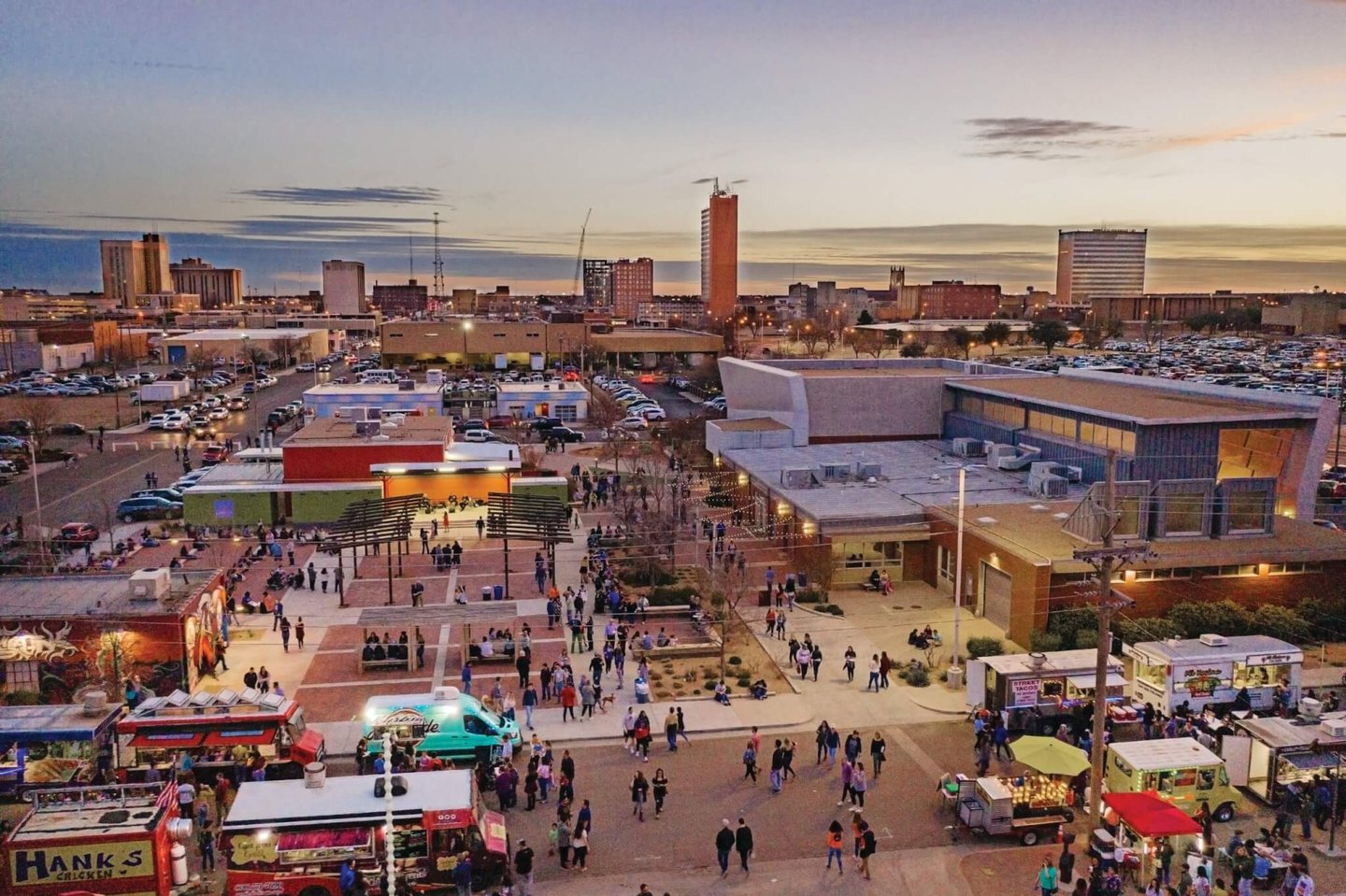
Lubbock is called the Hub City for a reason. It's the economic and cultural center of the South Plains — big enough to have everything you need, small enough that you can still get across town in twenty minutes. Texas Tech University anchors the city as a major research university, and alongside it the medical district — Covenant Health and University Medical Center — makes healthcare one of the largest employers in town. Add agriculture, and you've got an economy that doesn't live or die on one industry.
A market with real range
What I like about Lubbock as a real estate market is the range. You've got historic neighborhoods near Tech with mid-century character, established family areas in the south with mature trees, and wide-open growth corridors to the southwest and west where new construction is going up every week. There are options across every price point and neighborhood style — first homes, move-up homes, custom builds, land. Whatever stage you're in, there's a fit here.
The geography helps, too. Loop 289 rings the city, so commuting is straightforward from just about any direction. The growth is concentrated on the south and southwest sides, which is where most of the new subdivisions, new schools, and new retail are landing.
Downtown's second act
If you haven't been paying attention to downtown Lubbock over the last decade, it's worth a drive. There's been real reinvestment — restaurants, the Buddy Holly Hall, new apartments and offices. It matters for real estate because a healthy core supports values everywhere else. Buyers moving here from bigger metros are often surprised at how much is going on.
Why local knowledge matters here
Lubbock looks simple on a map — a flat grid on the plains. But block by block, it isn't. School district boundaries cut through the city in ways that surprise newcomers. Flood plain pockets, soil and foundation considerations, and neighborhood-by-neighborhood price behavior all matter when you're buying or selling. That's the kind of thing you learn working deals here, not reading about it.
If you're thinking about a move to Lubbock — or a move within it — start with a conversation about what matters to you: schools, commute, lot size, new versus established. I'll point you to the right neighborhoods, and I'll walk every property with a builder's eye.
Getting around and settling in
Daily life in Lubbock runs on the loop. Loop 289 circles the city, and most commutes — Tech, the medical district, downtown — run fifteen to twenty-five minutes from just about anywhere inside it. Lubbock Preston Smith International Airport sits on the north side with connections through the major hubs, which matters more than people expect until they need it.
Newcomers sometimes ask where "the nice part of town" is. The honest answer: there isn't one nice part — there are a dozen good ones, and the right one depends on your life. Young professionals lean toward central Lubbock and the Tech area. Families scatter south, southwest, and west by school district. Retirees and investors have their own pockets. Tell me your situation and I'll translate it into streets.